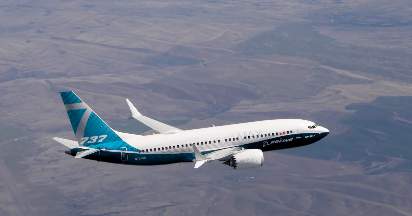
FAA requires checks on hundreds of Boeing 737 Max jets for potential fuselage cracks near the forward door. No cracks found on Max models so far. Directive covers Max 8, 9 and 8200 variants. Inspections start next month. Boeing supports the order.
The Federal Aviation Administration has directed operators of certain Boeing 737 Max aircraft to inspect a structural component for possible cracks. The airworthiness directive covers an estimated 471 planes registered in the United States. It also applies to about 1,429 aircraft operating internationally. The affected models are the 737 Max 8, the 737 Max 9 and the 737-8200.
The order focuses on the bear strap. This is a structural support located at the forward upper corner of the forward galley door cutout on the right side of the airplane near the front galley. The FAA issued the directive after reports of cracks in the same area on earlier generation Boeing 737 Next Generation aircraft. No cracks have been found on any 737 Max jets to date.
The agency stated that cracks in the fuselage skin and bear strap could prevent a principal structural element from sustaining limit loads. This could affect the structural integrity of the airplane. Airlines must perform visual inspections of the fuselage skin for existing repairs and conduct additional detailed and eddy current inspections as needed. Any cracks found must be repaired before the aircraft returns to service. Inspection schedules depend on each plane’s flight cycles, with intervals set to allow detection before cracks reach critical length.
The directive takes effect on September 10, 2026. The FAA estimates a general visual inspection will take about one hour and cost 85 dollars per aircraft. More detailed inspections could take up to four hours and cost up to 340 dollars per plane. Total costs for U.S. operators are projected at around 40,000 dollars for initial checks and about 160,000 dollars for the more thorough ones.
Boeing said it first notified operators of the issue on 737 Next Generation planes in 2019 and provided inspection instructions at that time. The company extended the recommended checks to 737 Max aircraft in 2024 because the models share a similar design and build process. A Boeing spokeswoman stated that the company supports the FAA directive, as it did for the earlier Next Generation order, and continues to support airline customers. Boeing has completed an engineering analysis of the cause and is working on design changes to prevent similar cracking in future aircraft.