Belgium has been granted the right to appeal FIFA’s decision to suspend the one match ban given to United States striker Folarin Balogun. The ruling came just hours before the two teams meet in the Round of 16 at the 2026 World Cup.
Balogun was sent off with a straight red card during the United States win over Bosnia and Herzegovina. FIFA later used Article 27 of its Disciplinary Code to suspend the automatic one-game ban for a probationary period of one year. This move made Balogun eligible to face Belgium.
The Royal Belgian Football Association said it was “astonished” by the decision. In a statement, the federation pointed to Article 66.4 of the same Disciplinary Code, which states that a red card automatically leads to a suspension for the next match. Belgium also noted that the FIFA World Cup 2026 Competition Regulations and a pre-tournament circular clearly confirm this automatic suspension rule.
Belgium’s federation said it is now investigating all possible options to protect fair play in the tournament. Reports indicate the appeal has already been formally lodged with FIFA. A decision is expected before the match kicks off, though the tight timeline makes a last-minute reversal unlikely.
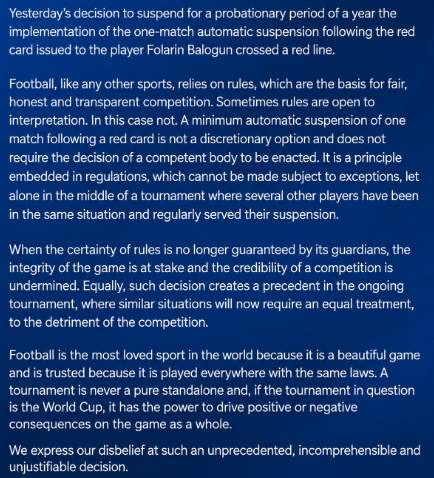
UEFA has also weighed in on the matter. The European governing body described FIFA’s handling of the case as crossing a red line. UEFA’s involvement adds weight to Belgium’s position and raises questions about consistency in how red-card suspensions are applied across different confederations.
The United States team has prepared with Balogun available. Coach Mauricio Pochettino had previously said the red card was never warranted, calling the incident an accidental action without intent to injure. FIFA’s decision to suspend the ban aligned with that view.
For Belgium, the situation creates an unusual pre-match distraction. The team must focus on the game while its federation pursues the appeal. The match carries extra stakes for both sides as they fight for a place in the quarterfinals.
The case highlights ongoing debates about refereeing standards and disciplinary consistency at the World Cup. FIFA has stood by its use of Article 27 to allow flexibility in certain cases. Belgium and UEFA argue that the automatic nature of red card bans should remain clear and consistent for all teams.
Whatever the outcome of the appeal, the focus will soon shift to the field in Seattle. Both the United States and Belgium will look to put the off field controversy behind them and deliver a strong performance in a high pressure knockout match.