
The Perseid meteor shower reaches peak activity on the night of August 12 into the early morning hours of August 13, 2026. Observers in the Northern Hemisphere can view the display under dark skies created by the new moon phase. The shower remains active through August 24, but the highest rates of meteors occur during this peak window.
Meteors from the Perseids appear to originate from a point in the sky known as the radiant. That radiant sits in the constellation Perseus. During the evening hours, Perseus rises above the northeastern horizon. As the night progresses, the constellation climbs higher in the northeastern sky and reaches its greatest elevation in the pre dawn hours.
Sky watchers should look generally toward the northeast after darkness falls. The meteors themselves can streak across any portion of the sky rather than only near the radiant. Viewing improves after midnight when the radiant stands higher above the horizon and Earth’s rotation carries observers more directly into the stream of particles. The best rates typically occur between midnight and dawn.
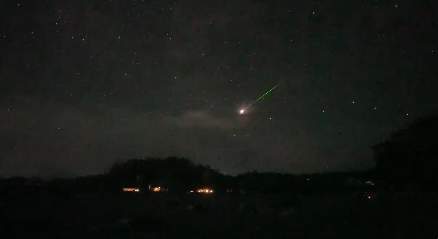
The particles that create the Perseids come from debris left by Comet 109P/Swift-Tuttle. When these fragments enter Earth’s atmosphere, they burn up and produce the visible streaks. Under clear, dark conditions away from city lights, rates can reach 50 to 100 meteors per hour near the peak. No special equipment is required. Observers need only a clear view of a wide section of sky and time for their eyes to adjust to the darkness, usually 20 to 30 minutes.
Local weather and light pollution affect visibility. Clear skies free of clouds and artificial light provide the most favorable conditions. The radiant remains above the horizon throughout the night for many mid northern latitudes, allowing continuous opportunity for sightings until morning light begins.